
wind
Green Sustainable Energies
WIND POWER PROJECTS
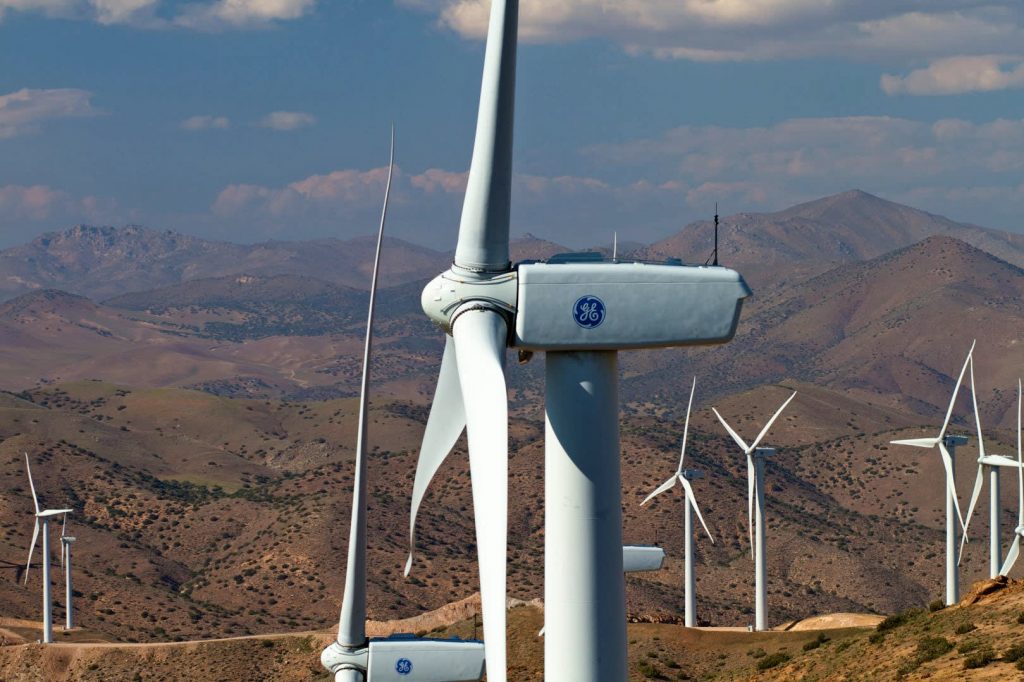
Wind is used to produce electricity using the kinetic energy created by air in motion. This is transformed into electrical energy using wind turbines or wind energy conversion systems. Wind first hits a turbine’s blades, causing them to rotate and turn the turbine connected to them. That changes the kinetic energy to rotational energy, by moving a shaft which is connected to a generator, and thereby producing electrical energy through electromagnetism.
The amount of power that can be harvested from wind depends on the size of the turbine and the length of its blades. The output is proportional to the dimensions of the rotor and to the cube of the wind speed. Theoretically, when wind speed doubles, wind power potential increases by a factor of eight.
Wind-turbine capacity has increased over time. In 1985, typical turbines had a rated capacity of 0.05 megawatts (MW) and a rotor diameter of 15 metres. Today’s new wind power projects have turbine capacities of about 2 MW onshore and 3–5 MW offshore.
Commercially available wind turbines have reached 8 MW capacity, with rotor diameters of up to 164 metres. The average capacity of wind turbines increased from 1.6 MW in 2009 to 2 MW in 2014.